
Guides · 2026年11月21日
Ayutthaya in a day from Bangkok: temples, boats and the train home
The old capital is the best day trip in Thailand, and the easiest to do badly by arriving late and following a crowd. This guide builds the day properly: an early train out of Bangkok, the six temples that matter on the island and across the river, the combined ticket the Fine Arts Department actually sells, a boat or a bicycle between them, and the train home before dark, with the guided tour as the honest alternative.
Ayutthaya was the capital of Siam for more than four centuries, from its founding in 1350 until Burmese armies destroyed it in 1767, and what they left behind is a city of brick prangs, headless Buddhas and river bends about 80 kilometres north of Bangkok. It is close enough for a day trip and big enough to defeat one. The ruins are not a single fenced site but a historical park spread across an island formed by three rivers, with more temples across the water. Done well, on an early train with a short list and a bicycle, it is the best day out of Bangkok there is. Done badly, it is four rushed temples in the midday heat. This guide is the first version. Our events calendar carries Ayutthaya listings alongside the Bangkok programme.
Out early: the train is part of the day
Take the train, and take an early one. Long distance trains on the northern line leave Bangkok's Krung Thep Aphiwat Central Terminal through the morning and reach Ayutthaya in about an hour on the express services, a little longer on the rapid and ordinary trains. The State Railway of Thailand timetable carries morning departures that put you at Ayutthaya station before nine, which is the arrival this day needs. The station sits east of the island across the Pa Sak River; a short ferry crossing or a songthaew ride takes you to the park edge. Buy the return ticket with the outbound one if your train allows it, and aim for a late afternoon departure back: the last good light on the western temples is the day's payoff, but the park's rhythm, not the sunset, should set your leaving time.
The minivan and the tour bus are the alternatives, and both trade the railway's pleasure for door-to-door ease. The road journey runs about an hour and a half in decent traffic. What the train gives you that the road does not is a fixed, traffic-proof arrival and the small ceremony of starting a day in the old capital the way travellers have started it for a century.
The ticket that matters
The Ayutthaya Historical Park is open daily from 8.00 in the morning to 6.00 in the evening, on the Fine Arts Department's published hours. There is no gate around the island: you walk the open ground freely and pay at the enclosed monuments. The department's published rates for foreign visitors are 80 baht per monument or a combined flat rate ticket at 300 baht, which is the right purchase for the route below, since it covers the main temples in one transaction. Thai visitors pay 10 baht per monument or 40 baht combined. Prices on official pages change and the ticket counter's posted rates govern on the day, but the shape of the choice does not: anyone seeing three or more of the central temples should buy the combined ticket at the first one.
The route: six temples, in order
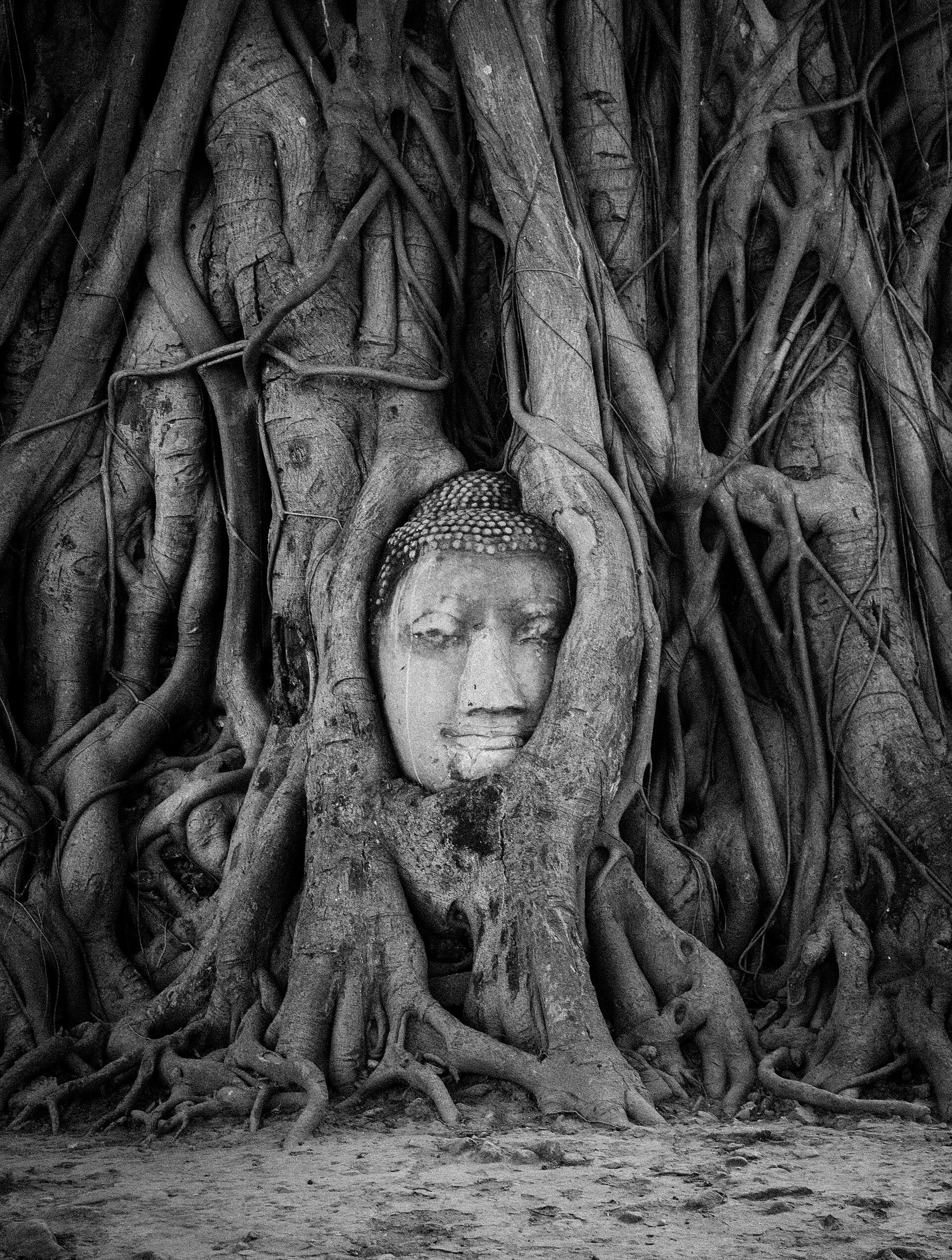
Start at Wat Mahathat, close to the island's centre and the park's most visited ground. It was one of the early kingdom's most important temples, and its field of broken prangs and seated, mostly headless Buddhas sets the day's tone. The sight everyone comes for sits near the edge of the compound: a sandstone Buddha head held in the roots of a fig tree. Photograph it the way the attendants ask, crouched low, so your own head stays below the Buddha's. It is a sacred image, not a prop, and the request is easy to honour.
Walk on to Wat Ratchaburana, across the road, built in the early fifteenth century where two princes died fighting for the throne, with a tall central prang you can climb into, down to a crypt that once held treasure. Then Wat Phra Si Sanphet, the royal temple of the old palace: three great bell-shaped chedis in a row, the postcard line of Ayutthaya, inside the palace grounds and beside the modern Wihan Phra Mongkhon Bophit with its large bronze Buddha. These three, with the museum if you want the gold the crypts gave up, are the island's core, and they are close enough together to walk.
Cross the river for the afternoon. Wat Chaiwatthanaram, on the west bank, is the day's architectural peak: a Khmer-style royal temple built in 1630, with a central prang ringed by smaller towers, best in the later light. Tour groups reach it by boat and road alike, and it rewards anyone who gives it the last hour before closing rather than the first. If energy remains, Wat Yai Chai Mongkhon, southeast of the island with its long row of seated Buddhas and tall chedi, is the sixth name on the list, and the reclining Buddha at Wat Lokayasutharam is the stop to substitute for it if the day runs short.
Between temples: bicycle, boat and shade
The island is flat, and a bicycle is the right vehicle for it: hire shops cluster near the station ferry landing and the park edge, and the central temples sit within easy pedalling of each other. A hired tuk tuk by the hour is the air-conditioned alternative and the sensible one in the hot season or with children. The boat belongs in the day once, not as transport but as perspective: river trips circle the island past the temples on the banks, and seeing the prangs rise over the water explains the city the Burmese attacked and the kings built better than any panel. Lunch is a river matter too. Ayutthaya's restaurants serve the giant river prawns the city is known for, grilled and split, at tables over the water; it is the one indulgence this day trip should not economise on.
Dress for temples, because these are temples: shoulders and knees covered, shoes off where asked, and a hat and water for the open ground between them, where shade is scarce from late morning. Start at the first temple at opening if you can. By eleven the light is hard, the heat is up and the day trip buses have arrived; the same ruins at half past eight are quiet, cool and yours.
The guided version
Everything above is doable independently, and the train and bicycle version is the one this guide recommends. The guided day tour from Bangkok earns its price in specific cases: a single spare day in Bangkok, no appetite for timetables, or a family that needs the logistics carried. The site's wired tour covers the historical park and Bang Pa-in Palace, the summer palace south of the city whose pavilions most independent day trippers skip for lack of time, with a guide across both. That palace is the tour's real argument: it is awkward to add to a train day, and it completes the story, from ruined capital to the palace the later kings built downstream.
Book the Ayutthaya Historical Park and Bang Pa-in full day tourvia Klook · affiliate link
Between the temples, leave twenty minutes for the Chao Sam Phraya National Museum, by Wat Ratchaburana. It holds what the ruins cannot show you: the gold found in the crypts of Wat Ratchaburana and Wat Mahathat when the Fine Arts Department restored them in the 1950s, jewellery, votive tablets and a relic casket, displayed in strong rooms built for treasure. It explains, in objects, why this ruined city mattered and why its temples were looted for centuries. Readers who skip museums on principle should make the exception here; the ruins make more sense afterwards, and the museum is the coolest room in Ayutthaya at midday, which is not a trivial consideration.
The train home
Leave the island by half past four and the day closes the way it opened, on the railway. The return trains run through the afternoon and evening, the ride is about an hour, and Bangkok gives you back your evening. Ayutthaya also sleeps well, with guesthouses along the river for anyone turning the day into a night, and dawn at the ruins is the connoisseur's version of this trip. But as a day, it is complete: a capital seen whole, at walking and pedalling pace, with the train doing the work at both ends. Few day trips anywhere repay an early start as reliably.
值得注目的活動,直接送到你的信箱。
每週三,把週末及之後值得注目的活動,直接送到你的信箱。