
Guides · 2026年11月16日
Chiang Mai in the cool season: December and January in the north
December and January are the weeks Chiang Mai exists for: dry, clear days, mornings cool enough for a jacket, and the mountain view from Doi Suthep at its sharpest all year. The complete cool season guide to the north: the Old City inside its moat, the half day up the mountain, the daytime and weekend markets in the right order, the Nimman coffee district, and the honest reason the window closes, the smoky season that builds from around February.
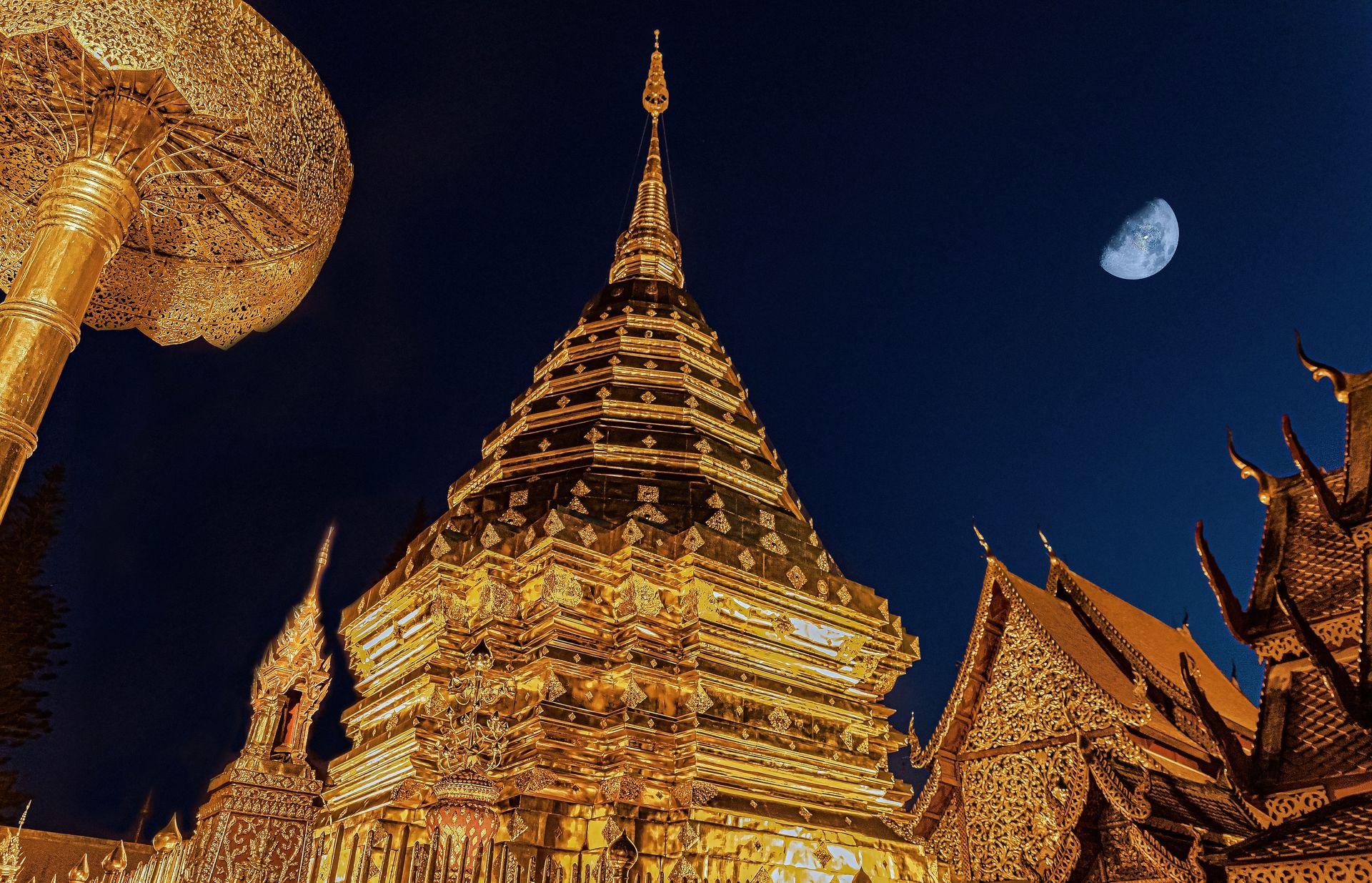
Every Thai city has a season it is really for, and Chiang Mai's is the cool season. In December and January the north does something Bangkok never does: it cools down. Days stay warm and dry under clear skies, and the mornings and evenings turn genuinely fresh, cool enough for a jacket at breakfast and a fleece up on the mountain. The rains are months behind, the haze is still months ahead, and the whole city moves outdoors: temple courtyards in the morning, markets by day, walking streets after dark. If you are choosing when to go north, this is the window, and this guide is built around using it well: the Old City, the mountain, the markets in their right order, and an honest account of why the same trip is a different proposition from around February, when the smoky season follows.
A word on this year's timing, because the seasons are a pattern, not a promise. The Thai Meteorological Department's seasonal outlook, issued in October, expected this cool season to start a little later and run a little milder than last year, lasting to about mid February, with the coldest spell from late December into early February. December and January sit squarely inside that window either way. For what the city does with a full moon inside the season's opening weeks, our Loy Krathong and Yi Peng 2026 guide is the November companion to this piece; this guide picks the city up where the festival leaves it.
The weather window, in plain terms
Use the long term pattern to plan, and it is a kind one. In December and January, Chiang Mai's daytime highs sit around 29 to 30 degrees, and the average night falls to the mid teens, colder again after a clear night and much colder up on the ridges. Rain is close to absent; January is about the driest month of the year. What that buys you in practice is a full day that works end to end. Mornings are the best hours of the whole year for the mountain and the temples, clear and cool. Midday is warm enough for a pool or a long lunch in the shade rather than a retreat indoors. Evenings belong outside, at the markets and the walking streets, in a light jacket. Pack for the swing, not the average: one warm layer for early starts and for Doi Suthep, where the temple terrace sits more than a thousand metres up and feels it at 8am.
The Old City: a square mile that carries the trip
Start where the city starts. Chiang Mai's Old City is the walled and moated square founded in 1296, roughly a mile and a half of moat on each side, with restored gates around it and Tha Phae Gate, on the east side, as the natural front door. Inside the square sit more than thirty working temples in a flat grid of lanes, and the honest way to do them is on foot, early, picking three rather than attempting the set.
Wat Phra Singh, at the western end of Ratchadamnoen Road, is the city's most revered temple, and its Lai Kham chapel is the finest piece of Lanna woodwork and mural painting most visitors will ever stand in front of. Wat Chedi Luang, near the centre, is built around a vast brick chedi raised in the fourteenth and fifteenth centuries and brought partly down by an earthquake in 1545; it was left in its ruined state, and the ruin, elephants and all, is more moving than any restoration. Wat Chiang Man, in the quiet north east corner, is the oldest temple in the city, founded with Chiang Mai itself. Between the three, fill the lanes with whatever catches you: Wat Phan Tao's dark teak hall beside Chedi Luang, a coffee in a garden courtyard, the Three Kings Monument where the city's founders stand in bronze. The Old City in cool season mornings, monks on their alms rounds and mist still on the moat, is the north at its best, and it costs nothing but an early start.
The mountain: Doi Suthep in the clear months
Fifteen kilometres west of the moat, the road climbs from the city up Doi Suthep to Wat Phra That Doi Suthep, the golden temple on the mountain and the most sacred site in the north. The temple stands at about 1,073 metres, and you reach it up a staircase of 309 steps flanked by long naga serpents, or by the small tram beside it. At the top: a gold plated chedi said to hold a relic of the Buddha, ringed by shrines, bells and murals, and a terrace with the whole of Chiang Mai spread out below.
This is where the season makes its difference, and it is worth being plain about it. The view from that terrace is the city's postcard, and December and January are when it is actually there: clear morning air, the city sharp below you, the ridges standing out one behind another. Go early, on a weekday if you can, both for the light and to arrive before the tour coaches. In the smoky months the same terrace can look out on a white nothing, which is the single best illustration of why this guide is dated December and January.
The straightforward way up is the half day tour, which pairs the temple with the Hmong village at Doi Pui further up the mountain, with transport and an English speaking guide included, so the hairpins, the parking and the timing are somebody else's problem and the morning is yours. It suits first visits and short stays exactly: up in the cool of the morning, back in the city for lunch.
Book the Doi Suthep and Hmong Village half day tourvia Klook · affiliate link
The markets, in the right order
Chiang Mai runs on markets, and the cool season is when they are at their most pleasant, because none of them involves standing in the rain or the worst of the heat. Work them in this order. In the morning, go east of the moat to Warorot Market, called Kad Luang, the city's big working market by the Ping River, where Chiang Mai itself shops: northern sausage and chilli pastes, dried fruit, fabric and clothes across several floors, with the Ton Lamyai flower market beside it at its best early, buckets of marigolds and orchids going out to the temples. It is a daytime, local market, and all the better for it.
The evenings split by the day of the week. On Saturday, Wualai Road south of Chiang Mai Gate closes for the Saturday Walking Street, the old silverworking street, smaller and calmer than its Sunday sibling and the place for metalwork and handicrafts. On Sunday, the big one: Ratchadamnoen Road closes from Tha Phae Gate to Wat Phra Singh and becomes the Sunday Walking Street, a kilometre of craft stalls, clothes, art and temple courtyard food courts running from late afternoon into the night. It is the best market in the north and, in the cool season, one of the best evenings in Thailand. On any other night, the Night Bazaar on Chang Klan Road covers the gap every evening, tourist facing and cheerful, while Nimman, west of the Old City, does the contemporary version of the evening: Nimmanhaemin Road and its sois of speciality coffee shops, small boutiques and restaurants, with One Nimman as its courtyard centre. Coffee is a serious local industry in the north, and a slow Nimman afternoon is part of the cool season ritual, not a filler between sights.
The smoky season follows
Here is the part the brochures skip. From around February, and at its worst through March and into April, northern Thailand's burning season settles over the Chiang Mai valley: agricultural burning and forest fires across the north and in neighbouring countries send smoke into the basin, air quality drops into unhealthy ranges, the heat builds at the same time, and the mountain views this guide is built on can disappear for weeks. The pattern varies by year and the haze usually arrives in stages, haze creeping in during February before the worst of it, but the direction of travel is reliable enough to plan around. If your dates are fixed in that window, the city still works at street level, with indoor hours in the middle of the day and a good mask on the worst days. But if you have any choice at all, choose the window this piece is about. December and January are not peak season by accident or by marketing. They are when the north is clear, cool and itself.
Where to stay in the cool season
Base inside the moat if this is your first visit: the temples are your morning walk, the Sunday Walking Street passes your door, and Tha Phae Gate puts the river and Warorot a short walk east. Base in Nimman if cafes and evenings matter more than temples, with Doi Suthep's road at your end of town. Either way, book the cool season early, especially across the Christmas and New Year weeks and any festival weekend, because the Old City's small courtyard hotels and guesthouses fill first and the whole city knows these are the best weeks of its year.
Stay in Chiang Maivia Booking.com · affiliate link
Set a Thailand What's On alert while you plan, and we will email you as the December and January programmes, markets and temple events for your dates are confirmed.
值得注目的活動,直接送到你的信箱。
每週三,把週末及之後值得注目的活動,直接送到你的信箱。